
Unlock growth with our digital marketing tutorials. Learn SEO, social media, and paid ads with actionable strategies for building a profitable online business.
7 Unbeatable Example of B2C Companies Dominating in 2026
7 Unbeatable Example of B2C Companies Dominating in 2026

by Mayur
0
0
The Business-to-Consumer (B2C) landscape is a dynamic and competitive arena where brands connect directly with individual customers. Understanding what separates the leaders from the rest is crucial for anyone building an online business. This isn't just a list of famous names; it's a strategic breakdown of their models, marketing tactics, and customer experiences. We will analyse each example of B2C excellence to extract actionable insights that you can apply directly to your own projects. Whether you're building a niche affiliate hub or scaling a digital product, the lessons from these giants provide a blueprint for growth.
We will dive deep into the specific strategies that power their success. For each company, you will find a detailed analysis, screenshots, and direct links to see their model in action. By dissecting their approaches, from logistics and loyalty programmes to community building and user acquisition, you can identify replicable tactics. Mastering these foundational business models is a critical first step.
Beyond understanding these structures, mastering modern marketing channels is also key for any online entrepreneur. Learning how to leverage effective TikTok marketing for small business, for instance, can unlock significant growth by connecting you with new audiences. This guide focuses on giving you a clear, practical playbook. Let’s explore the models that are defining success today.
1. Mayur Networks: The 7-Day Hub-Centric Business Builder
Mayur Networks represents a powerful and modern example of B2C in the digital education sector. It directly serves aspiring entrepreneurs and marketers with a comprehensive platform designed for rapid skill acquisition and business launch. The core offering is a beginner-focused online programme and community that teaches individuals how to build a "hub-centric" online business, promising a functional framework within just seven days.
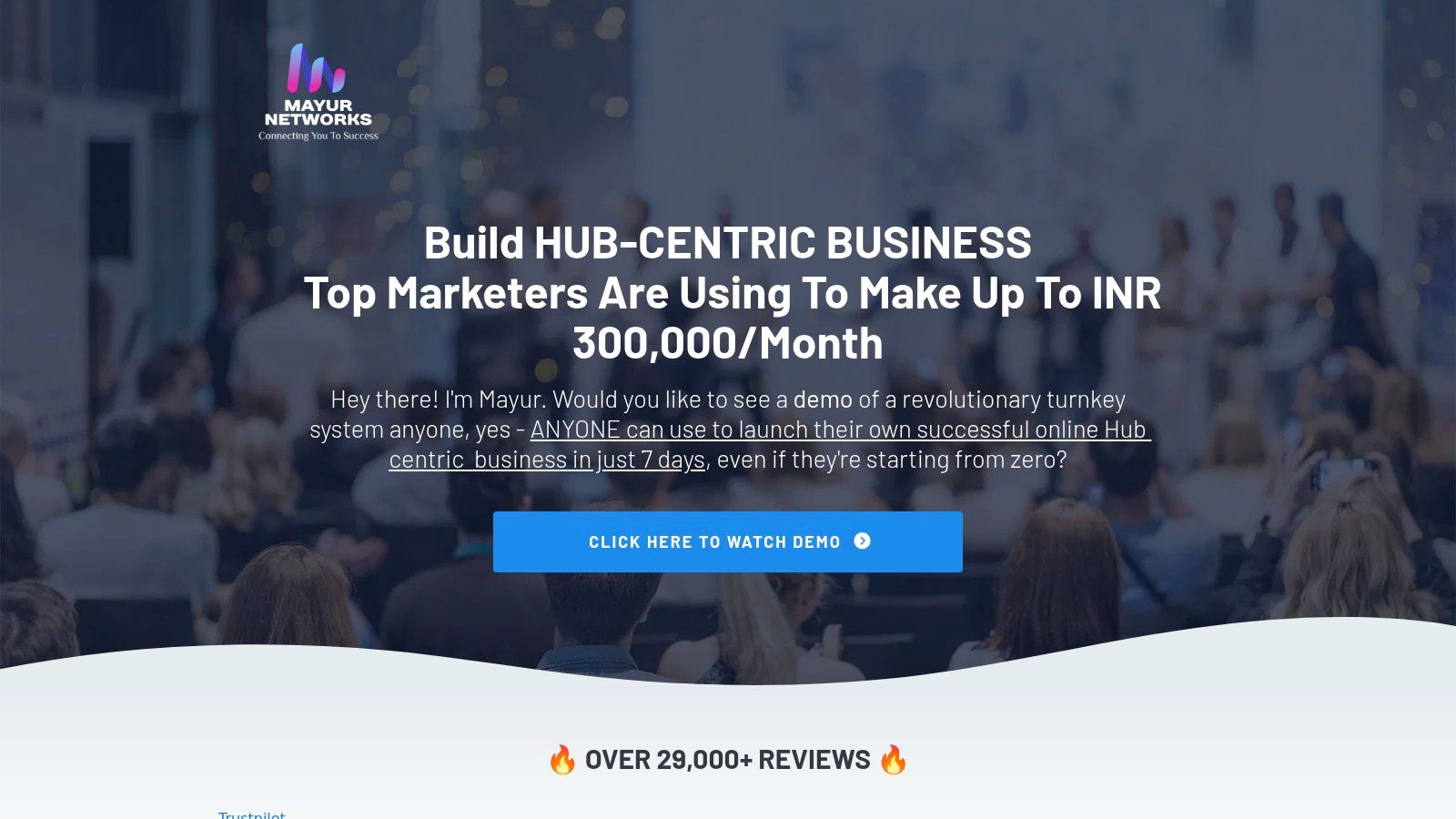
What makes this platform a standout B2C model is its multi-layered value proposition, blending education, community, and a clear path to monetisation. It caters directly to the end consumer’s desire for financial independence and flexible work, packaging a complex process into an accessible, step-by-step system.
Strategic Analysis: The Freemium-to-VIP Funnel
Mayur Networks masterfully employs a freemium model to attract a wide audience, lowering the barrier to entry significantly. New users gain free access to premium-level courses simply by joining the community. This strategy builds trust and demonstrates value upfront, creating a warm audience for its primary monetisation channel: the VIP membership.
Key Takeaway: By providing high-value content for free, Mayur Networks establishes authority and builds a loyal community. This engaged user base is then more receptive to upsells like the exclusive VIP programme, which offers advanced, time-sensitive strategies and direct support, a classic B2C customer journey.
The platform's emphasis on speed ("7-Day" builder) and social proof (over 29,000 Trustpilot reviews) are crucial B2C marketing tactics. They address common consumer pain points like procrastination and scepticism, making the offer more compelling and credible. The clear income disclaimer also adds a layer of transparency, which is vital for building long-term consumer trust.
Actionable Insights for Your Business
Implement a Value-First Model: Offer a substantial portion of your expertise for free. This could be a detailed mini-course, a set of powerful templates, or access to a community forum. This builds an audience and qualifies leads for your paid offerings.
Create a Tiered Membership Structure: Develop a premium or VIP tier that provides exclusive, high-impact benefits. This could include personalised coaching, early access to new content, or private networking opportunities.
Leverage Social Proof Aggressively: Prominently display customer testimonials, reviews, and case studies. For a B2C audience, evidence of success from peers is a powerful conversion tool.
Mayur Networks is an exemplary B2C platform because it sells more than just a course; it sells a tangible outcome, a supportive community, and a clear, actionable pathway for individuals to achieve their goals.
Website: https://mayurnetworks.com
2. Amazon India
Amazon India stands as a quintessential example of B2C e-commerce, operating as a massive online marketplace that connects millions of consumers directly with a vast array of products. It has fundamentally reshaped retail in India by offering unparalleled convenience, selection, and speed, making it an essential platform for everything from daily groceries to high-end electronics. Its success lies in a meticulously built ecosystem encompassing logistics, payments, and a powerful membership programme.
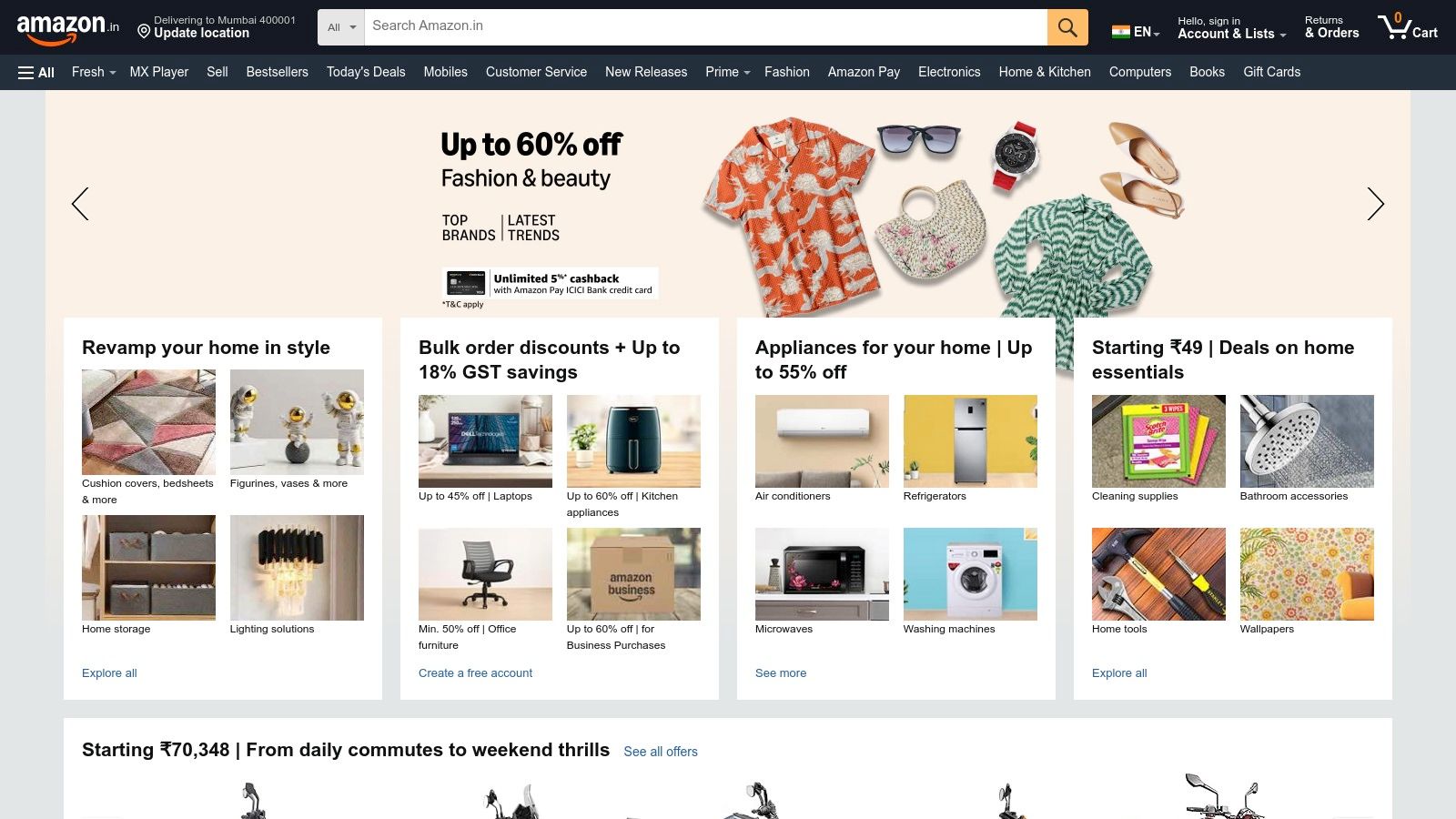
The platform's core offering is its Prime membership, which provides subscribers with benefits like free one-day or same-day delivery on eligible items, exclusive deals, and access to its streaming services. For essentials, Amazon Fresh offers two-hour delivery slots in major cities, a game-changer for urban consumers. This focus on rapid fulfilment is a key differentiator, creating a high-value proposition that encourages repeat purchases and deepens customer loyalty.
Strategic Analysis: The Flywheel of Fulfilment and Membership
Amazon’s strategy revolves around its famous "flywheel" concept. By offering a massive assortment and competitive prices, it attracts more customers. This increased traffic attracts more third-party sellers, which further expands the product selection and improves prices. At the centre of this is the Prime membership, which acts as a powerful accelerant.
Key Takeaway: Amazon India weaponises convenience. Its B2C model isn't just about selling products; it's about selling time and reliability. The investment in its own logistics (Amazon Transportation Services) and tiered Prime plans ensures it can meet and exceed customer expectations for speed, turning a transactional relationship into a habitual one.
Actionable Insights for Affiliate Marketers
For affiliate marketers, Amazon India offers a structured and accessible entry point. The Amazon Associates programme allows you to earn commissions by promoting products, a model that is foundational for anyone learning how to start an online business.
Niche Selection is Crucial: Instead of competing on popular categories like smartphones, focus on underserved niches. Think "eco-friendly kitchen supplies," "ergonomic work-from-home furniture," or "speciality coffee equipment."
Leverage Sale Events: Create content calendars around major sales like the Great Indian Festival and Prime Day. Publish "best deals" lists, product comparison articles, and video reviews to capture high-intent traffic during these periods.
Build Authority with Content: Don't just link to products. Create in-depth reviews, how-to guides, and tutorials that solve a problem for your audience. This builds trust and makes your affiliate links more effective.
By dissecting this successful example of B2C, aspiring entrepreneurs can see how a relentless focus on customer experience, supported by a robust logistical and membership framework, creates a dominant market leader.
Website: https://www.amazon.in
3. Flipkart
Flipkart is a powerhouse example of B2C e-commerce in India, functioning as a direct competitor to Amazon by connecting a massive consumer base with sellers across countless categories. It has cemented its position in the Indian market through a focus on key growth areas like fashion, electronics, and large appliances, often pioneering features and buyer protections tailored specifically for Indian consumers. Its strategy hinges on aggressive sales events, a robust loyalty programme, and building trust for high-value purchases.
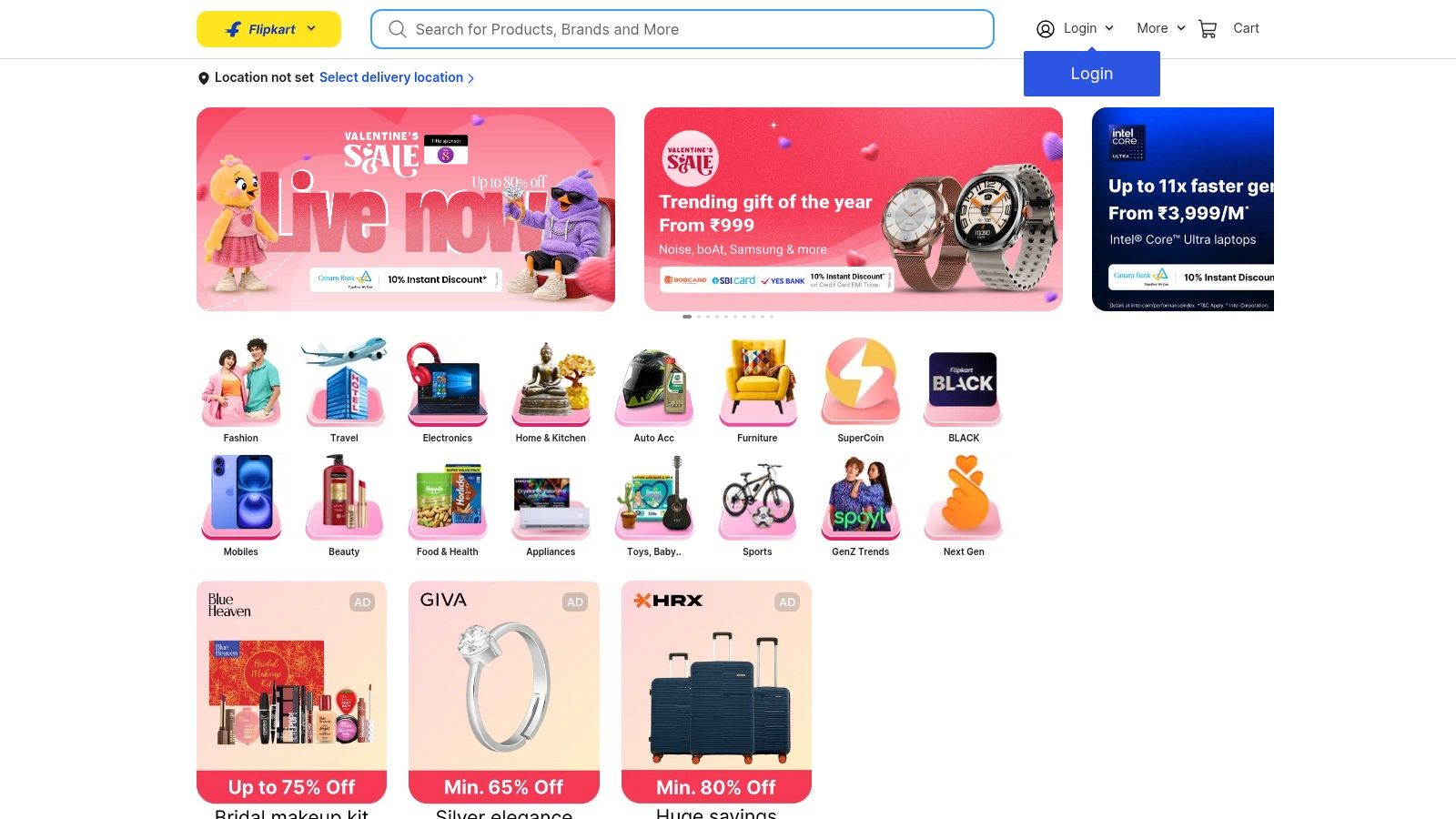
The platform differentiates itself with a multi-tiered loyalty system, including Flipkart Plus and VIP, which rewards frequent shoppers with "SuperCoins" that can be used for discounts or redeemed for other services. For high-value items, its Trust Shield programme offers complimentary 30-day post-purchase protection, adding a layer of security that encourages conversions on big-ticket products like televisions and smartphones. This focus on building buyer confidence is a core component of its B2C model.
Strategic Analysis: The Ecosystem of Loyalty and Trust
Flipkart's strategy is built on creating a self-reinforcing ecosystem where sales events drive traffic and loyalty programmes retain it. By making its SuperCoins a versatile currency within its partner network, it encourages users to stay locked into its platform. Furthermore, Trust Shield directly addresses a major friction point in Indian e-commerce: anxiety over purchasing expensive items online.
Key Takeaway: Flipkart’s B2C model thrives on event-driven commerce and trust-building initiatives. It understands that while price is a driver, purchase security and loyalty rewards are what create repeat customers, especially in competitive categories like electronics.
Actionable Insights for Affiliate Marketers
The Flipkart Affiliate programme presents a significant opportunity, particularly for those targeting electronics and fashion niches. Success requires a strategic approach that aligns with Flipkart's own promotional calendar and value propositions. This is a crucial step for marketers looking at how to build brand awareness around their affiliate sites.
Target High-Value Electronics: Leverage the Trust Shield feature in your content. Create reviews or comparison articles for smartphones, laptops, or TVs, and explicitly mention the added 30-day protection as a key benefit of purchasing through your link.
Create Hype Around "Big Billion Days": This is Flipkart's flagship sale. Plan your content months in advance, with "early look" articles, deal predictions, and "best offers" guides. This high-volume event can drive a substantial portion of your annual affiliate income.
Focus on Private Labels: Promote Flipkart’s own brands like MarQ (electronics) or SmartBuy (accessories). These often have higher affiliate commissions and are heavily promoted on the platform, increasing their conversion potential.
By analysing this powerful example of B2C, marketers can learn how to align their promotional strategies with a platform’s unique trust signals and loyalty mechanics to maximise conversions.
Website: https://www.flipkart.com
4. Myntra
Myntra is a premier example of B2C e-commerce focused on fashion, beauty, and lifestyle, dominating the Indian market through curated brand experiences. It operates as a specialised marketplace that connects style-conscious consumers directly with a massive assortment of domestic and international brands. Myntra has successfully positioned itself not just as a retailer, but as a fashion discovery platform, blending content, community, and commerce to guide purchasing decisions.
The platform differentiates itself with a fashion-first interface, frequent brand-led promotions, and innovative delivery models. A standout feature is 'M-Now,' an ultra-fast delivery service available in select cities that promises to deliver products within hours. This service targets the modern consumer's demand for instant gratification, especially for last-minute apparel or beauty needs, setting a new benchmark for speed in the online fashion sector.
Strategic Analysis: The Curation and Content Engine
Myntra’s strategy is built on becoming the definitive authority on fashion in India. Unlike broader marketplaces, its entire user experience is tailored to style discovery, from influencer collaborations and lookbooks to its AI-powered size and fit recommendations. This content-rich environment transforms the shopping journey from a simple transaction into an engaging, aspirational experience that builds brand loyalty and encourages higher average order values.
Key Takeaway: Myntra masters the art of specialisation. Its B2C model thrives by creating a high-trust, curated environment where consumers feel confident in their purchase decisions. By focusing intensely on the fashion vertical, it builds credibility that a generalist marketplace cannot easily replicate.
Actionable Insights for Affiliate Marketers
For affiliates in the fashion and lifestyle space, Myntra provides a lucrative ecosystem. The Myntra Affiliate Programme enables you to monetise your audience by tapping into its vast and trend-forward catalogue, a key step for those exploring how to start an online business in this niche.
Focus on Micro-Trends: Go beyond broad categories. Create content around specific aesthetics like "cottagecore essentials," "monsoon-ready footwear," or "festive fusion wear." Use Myntra’s brand variety to curate unique looks.
Create "Get the Look" Content: Base your content on celebrity styles or popular web series characters. Recreate their outfits using products available on Myntra and embed your affiliate links. This is highly effective on visual platforms like Instagram and YouTube.
Highlight Brand-Specific Sales: Myntra’s "End of Reason Sale" (EORS) is a massive traffic driver. Develop dedicated content strategies around it, including pre-sale guides, top deal roundups, and last-chance reminders to capture purchase-ready audiences.
By analysing this powerful example of B2C, marketers can learn how a deep focus on a single vertical, combined with a content-led discovery model, can create an incredibly loyal customer base and a powerful e-commerce brand.
Website: https://www.myntra.com
5. Nykaa
Nykaa is a premier example of B2C success in the specialised beauty and personal care market. It operates as both a marketplace for hundreds of brands and a direct-to-consumer (DTC) house of its own brands, connecting millions of Indian consumers with authentic cosmetic and wellness products. The platform has revolutionised the beauty industry in India by prioritising authenticity, curated content, and a seamless omnichannel experience.
The platform’s core strength lies in its inventory-led model, ensuring products are sourced directly from brands, thus guaranteeing authenticity. Features like fast dispatch (1-4 business days), easy 15-day returns on eligible items, and free shipping above low order thresholds create a trustworthy and convenient shopping environment. This focus on customer assurance has built a loyal community that relies on Nykaa for genuine products and expert advice.
Strategic Analysis: The Content-to-Commerce Engine
Nykaa’s strategy is built on a powerful content-to-commerce engine. It doesn't just sell products; it educates its audience through its "Nykaa TV" video content, beauty blog, and expert tutorials. This positions the platform as an authority in the beauty space, building trust and guiding purchasing decisions. By creating a community around beauty and wellness, Nykaa turns transactional customers into engaged brand advocates.
Key Takeaway: Nykaa masters its niche by building trust through content and authenticity. Its B2C model thrives by creating an ecosystem where consumers feel confident in their purchases, supported by educational resources and a clear commitment to genuine products. This community-first approach fosters immense loyalty.
Actionable Insights for Affiliate Marketers
For affiliate marketers, Nykaa provides a lucrative niche with a highly engaged audience. The Nykaa Affiliate Programme is ideal for beauty influencers, bloggers, and content creators looking to monetise their expertise.
Solve Specific Problems: Instead of general makeup tutorials, focus on solving specific consumer pain points. Create content around "the best foundations for oily, acne-prone skin" or "skincare routines for hyperpigmentation." Learning how to find your niche market within the broader beauty category is vital.
Leverage New Launches: Nykaa frequently has exclusive product launches. Be the first to review these products, create swatch videos, or write "first impression" blog posts to capture high-intent search traffic from eager consumers.
Build a Personal Brand: The beauty market is driven by personality and trust. Share your authentic experiences with products and build a genuine connection with your audience. Your personal endorsement will make your affiliate links far more effective than a simple product listing.
By analysing this powerful example of B2C, entrepreneurs can see how deep vertical integration, content marketing, and a laser focus on a specific audience can create a dominant and highly defensible brand.
Website: https://www.nykaa.com
6. BigBasket
BigBasket is a prime example of B2C in the online grocery sector, revolutionising how Indian households purchase daily necessities. It operates as a direct-to-consumer digital supermarket, offering everything from fresh produce and staples to household supplies and personal care items. The platform's success is built on solving the core pain points of traditional grocery shopping: time, convenience, and assortment, all managed through a sophisticated inventory and delivery system.
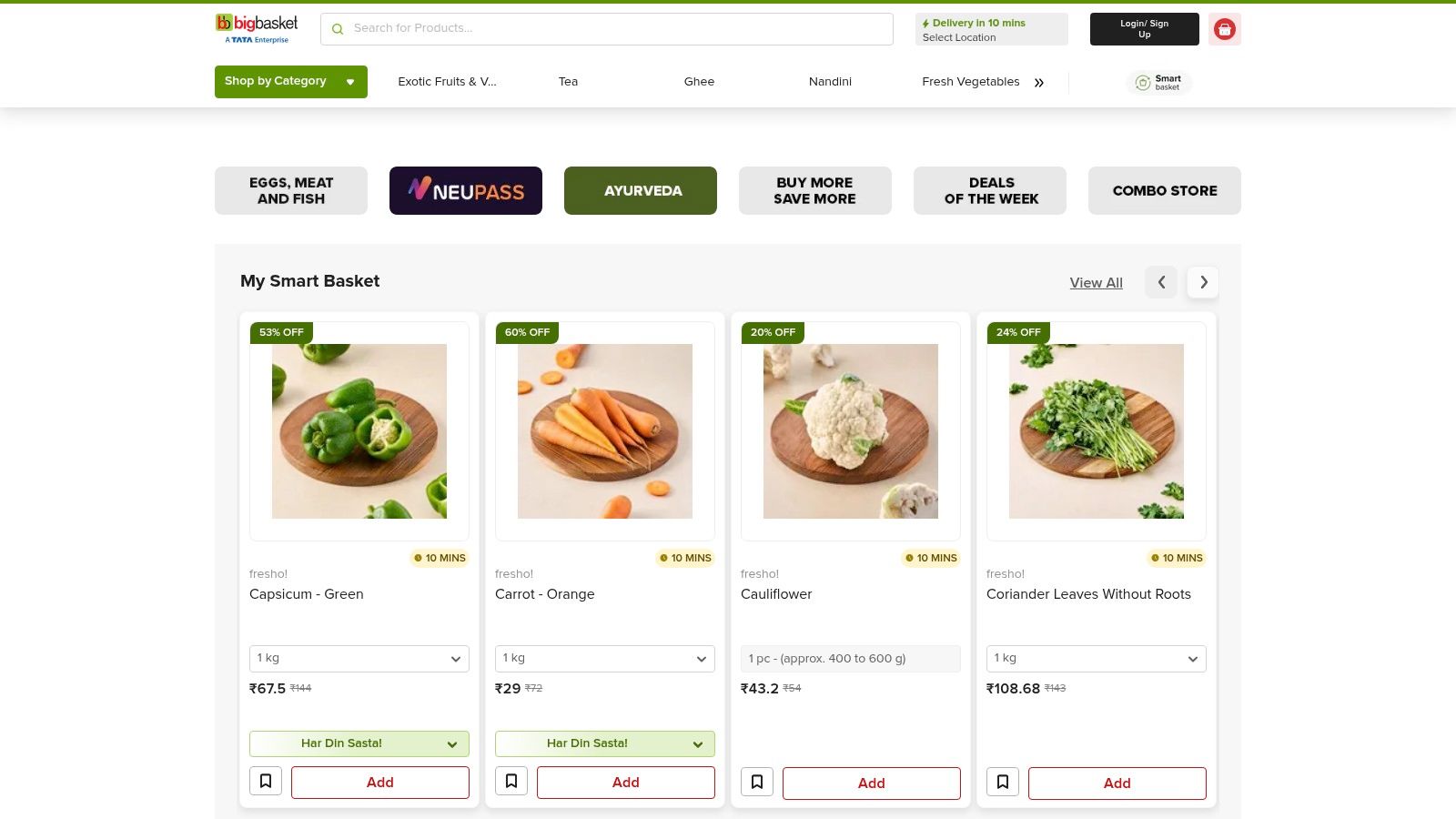
The platform's key features include scheduled time-slot deliveries, allowing customers to plan their orders days in advance, and an express service (bbnow) in select cities for last-minute needs, promising delivery in under an hour. Its subscription service, bbstar, offers benefits like free delivery on lower order values and priority slots, fostering habit-forming behaviour and locking in customer loyalty. By mastering the complex logistics of perishable goods, BigBasket provides a reliable and predictable service that customers can integrate into their weekly routines.
Strategic Analysis: The Habit Loop of Convenience and Subscription
BigBasket's strategy is centred on creating a habitual purchasing loop driven by convenience and a compelling membership programme. Unlike one-off e-commerce purchases, grocery shopping is a high-frequency, recurring need. By offering predictable delivery slots and a subscription that lowers the friction for smaller, frequent orders, BigBasket embeds itself into the customer's daily life. This focus on building habits is a powerful competitive moat, making it harder for users to switch providers. To further explore successful recurring revenue strategies beyond BigBasket, consider reviewing these Top Subscription Model Examples.
Key Takeaway: BigBasket's B2C model thrives on reliability and routine. It sells predictability in a chaotic market. The platform's tiered delivery options (standard vs. express) cater to different user needs - planned bulk purchases and urgent top-ups - ensuring it captures the entire spectrum of grocery-related missions.
Actionable Insights for Affiliate Marketers
While BigBasket's direct affiliate programme may be limited, marketers can leverage the grocery niche by focusing on related content that solves problems for home-makers and urban professionals. This is a masterclass in building an online presence around a core human need.
Create Niche Food Blogs: Focus on specific dietary needs like "gluten-free Indian recipes," "vegan meal prep," or "quick recipes for working parents." Use these platforms to recommend specific ingredients or kitchen tools available on various platforms.
Promote Adjacent Products: Partner with brands for kitchen gadgets, organic food products, or meal-planning apps. Your content about grocery efficiency and healthy eating makes these promotions feel natural and valuable.
Build a Community Around Home Management: Create content on topics like "how to organise your kitchen pantry" or "weekly meal planning to save money." This builds a loyal audience and improves the overall customer experience, which you can learn more about here.
By understanding this example of B2C, entrepreneurs can learn how to build a business around recurring needs, using subscription and convenience as powerful tools for customer retention.
Website: https://www.bigbasket.com
7. Swiggy
Swiggy exemplifies a modern, service-based example of B2C, operating as a hyper-local, on-demand platform that directly serves consumers' immediate needs. It has revolutionised urban convenience in India by building a three-sided marketplace connecting customers, restaurants, and delivery partners. Its core business has expanded from just food delivery to include quick-commerce groceries (Instamart) and instant package delivery (Genie), making it an indispensable part of daily life for millions.
The platform's primary value proposition is its Swiggy One membership, which bundles benefits like free delivery on eligible food and grocery orders, exclusive discounts, and no surge fees. This subscription model is designed to drive repeat usage and lock in customer loyalty. With features like live order tracking and a vast network of partner restaurants, Swiggy has set the standard for convenience in the on-demand economy.
Strategic Analysis: The trifecta of Speed, Selection, and Subscription
Swiggy’s B2C strategy is built on a powerful trifecta: delivering an unmatched selection of restaurants and stores with incredible speed, all while encouraging loyalty through a compelling subscription. Its expansion into Instamart (15-30 minute grocery delivery) was a masterstroke, leveraging its existing delivery network to capture a larger share of the consumer's wallet and increase order frequency. This diversification turns a single-use case app into an everyday convenience engine.
Key Takeaway: Swiggy sells immediacy. Its B2C model thrives by fulfilling micro-moment needs instantly. By deeply understanding the customer journey mapping from craving to consumption, it has optimised every touchpoint to reduce friction and maximise satisfaction, making the premium for on-demand delivery feel not just justified, but essential.
Actionable Insights for Affiliate Marketers
While Swiggy has a direct referral programme, the real opportunity for marketers lies in creating hyperlocal or food-centric content that intersects with Swiggy’s services. This is a powerful way to monetise a local audience.
Become a Local Food Authority: Start a blog, Instagram, or YouTube channel focused on the food scene in your city. Review restaurants available on Swiggy, create "top 10 biryanis" or "best late-night snacks" lists, and embed affiliate links for related kitchen gadgets or recipe books.
Target the Convenience Niche: Create content around "work from home lunch ideas," "quick meal prep," or "hosting a last-minute party." Position Swiggy Instamart as the solution and link to products that complement this theme.
Leverage Influencer Marketing: Partner with local food bloggers or influencers who can promote specific restaurants or Swiggy One memberships to their engaged followers, using your unique referral code.
By analysing this powerful example of B2C, entrepreneurs can learn how to build a brand around solving an immediate, recurring customer pain point and then expanding services to deepen that relationship.
Website: https://www.swiggy.com
Comparison of 7 B2C Companies
Item | Implementation Complexity (🔄) | Resource Requirements (⚡) | Expected Outcomes (⭐) | Ideal Use Cases (💡) | Key Advantages (📊) |
|---|---|---|---|---|---|
Mayur Networks | 🔄 Low — turnkey 4-step, step-by-step onboarding | ⚡ Low–Moderate — time for training; VIP may cost extra | ⭐⭐ — fast hub launch (7 days) but results vary | 💡 Beginner affiliates, solopreneurs, creators wanting fast launch | 📊 Community support, free premium courses, strong social proof |
Amazon India | 🔄 Low (user) / Moderate (seller operations) | ⚡ High (logistics scale) but low for shoppers | ⭐⭐⭐ — broad selection + rapid delivery for Prime users | 💡 Mass-market shoppers, fast-delivery needs, wide-category buyers | 📊 Massive assortment, Prime benefits, strong logistics network |
Flipkart | 🔄 Low (user) / Moderate (seller) | ⚡ Moderate — loyalty programs and seller variability | ⭐⭐ — strong for electronics/fashion; good deals during sales | 💡 Deal-seekers, electronics/appliance buyers, loyalty members | 📊 Aggressive sales, SuperCoins, Trust Shield for high-value items |
Myntra | 🔄 Low (user) / Moderate (catalog curation) | ⚡ Moderate — brand partnerships, fashion logistics | ⭐⭐ — strong discovery and fashion selection; fast where M-Now active | 💡 Fashion-first shoppers, trend discovery, rapid-delivery pilots | 📊 Curated fashion catalog, brand-led promos, M-Now option |
Nykaa | 🔄 Low — straightforward beauty marketplace | ⚡ Low–Moderate — inventory & brand relationships | ⭐⭐ — reliable beauty authenticity and launches | 💡 Beauty/skincare buyers, brand-conscious shoppers | 📊 Strong authenticity focus, clear returns, exclusive launches |
BigBasket | 🔄 Low (user) / High (fulfillment ops) | ⚡ Moderate — scheduled slots, subscription features | ⭐⭐ — predictable recurring groceries, reliable slots | 💡 Regular grocery shoppers, subscription/recurring orders | 📊 Time-slot scheduling, wide grocery assortment, express delivery in select areas |
Swiggy | 🔄 Low (user) / High (operations & delivery) | ⚡ High — dense logistics; membership reduces per-order cost | ⭐⭐ — very wide restaurant reach and fast on-demand delivery | 💡 Food delivery, quick-commerce groceries (Instamart), multi-service convenience | 📊 Large restaurant network, Swiggy One membership, live tracking and rapid fulfillment |
Your Next Move: Applying These B2C Lessons to Your Hub
Throughout this exploration of B2C titans, from the marketplace dominance of Amazon India and Flipkart to the niche mastery of Nykaa and the on-demand convenience of Swiggy, a clear pattern emerges. Success in the B2C landscape is not about being everything to everyone. It is about identifying a specific customer need and solving it better, faster, or with more authenticity than anyone else. Each example of B2C we analysed provides a powerful blueprint for building a resilient, customer-centric business.
The core lesson is one of focused value creation. You don’t need the sprawling logistical network of a BigBasket or the massive marketing budget of a Myntra to build a successful online hub. Instead, you need to borrow their principles: obsession with customer experience, deep understanding of your niche, and a seamless path from discovery to purchase. The strategies of these giants are not out of reach; they are scalable frameworks waiting to be adapted.
Your Actionable Blueprint
So, how do you translate these high-level strategies into tangible actions for your own affiliate or hub-based business? It starts with a strategic choice. Don't try to replicate Amazon's entire model. Instead, ask yourself:
Can I be like Nykaa? Focus on a specific, passionate niche. Build a community around trust and expert curation, becoming the go-to authority for a particular audience. This involves creating in-depth content, honest reviews, and fostering genuine engagement.
Can I be like Swiggy? Centre your strategy on unparalleled convenience. Organise information, tools, or product recommendations in a way that saves your audience time and effort. Your value proposition becomes the speed and ease with which you solve their problem.
Can I be like Flipkart? Master the art of localisation. Understand the unique cultural nuances, language, and buying habits of your target demographic in India. Tailor your content, promotions, and affiliate recommendations to resonate deeply with their specific context.
Implementing Your Chosen Strategy
Once you have identified your core approach, the next step is implementation. Consider the essential tools and factors required to bring your vision to life. You'll need a robust platform to serve as your digital home base, content creation tools to engage your audience, and analytical software to track your progress and refine your strategy.
The most critical factor is consistency. Building a trusted brand, whether through content like Nykaa or service like Swiggy, requires a relentless commitment to your chosen value proposition. Your audience needs to know what to expect from you every time they interact with your hub. By focusing on a single, well-executed strategy inspired by a successful example of B2C, you lay a strong foundation for sustainable growth and profitability. The journey from aspiring entrepreneur to a successful hub owner begins with a single, focused step.
Ready to stop just studying success and start building your own? Instead of piecing together dozens of tools and strategies, Mayur Networks provides an all-in-one platform designed to help you launch and scale a profitable online hub based on these proven B2C principles. Turn these examples into your reality by visiting Mayur Networks and discover the framework built for your success.
Leave a Comment 👋
Leave a Comment 👋
0 Comments
Want to Build Your Digital Hub?
Want to Build Your Digital Hub?
Learn How To Launch Your Own Wildly Profitable Digital Hub In Just 7 Days.
Learn How To Launch Your Own Wildly Profitable Digital Hub In Just 7 Days.

Similar Posts
Similar Posts

by Mayur
0
0
High-Quality Leads From Facebook Ads The Modern Playbook
Learn how to get high-quality leads from Facebook Ads with our proven playbook. Master campaign setup, ad creative, and optimization for real business growth.